4Life Transfer Factor Review — Immune Activation Within Two Hours?
In today’s wellness market, immune-support supplements are everywhere — but few have been lab tested. 4Life Transfer Factor®. According to the company, its proprietary 4Life Transfer Factor® Tri-Factor Formula that is “clinically proven to activate the immune system within two hours.”* That’s an intriguing statement: a nutraceutical that can influence immune activity within 2 hours. But what does the science say behind this assertion, what exactly are transfer factors, and how might the ingredients in 4Life products support immune function? Let’s take an evidence-based look.
What Are Transfer Factors?
“Transfer factors” have a long history in immunology. Originally described in the mid-20th century, transfer factors are small immune-derived molecules — fragments of proteins or peptides — that appear to carry information between immune cells. In laboratory research, they were shown to transfer certain aspects of cell-mediated immunity from a sensitized donor to a naïve recipient. They are not traditional antibodies, vitamins, or herbs, but rather small immune messenger molecules that appear to influence immune communication.
These molecules are often sourced from bovine colostrum (the first milk produced after birth) and egg yolks, where they are naturally found in abundance and may help pass immune “memory” to newborn mammals.
In commercial supplements like 4Life’s products, this concept is translated into a proprietary blend of bioactive immune peptides — essentially small proteins and peptides that, in theory, are designed to support immune cell communication and recognition.
The 4Life Clinical Study: What It Found
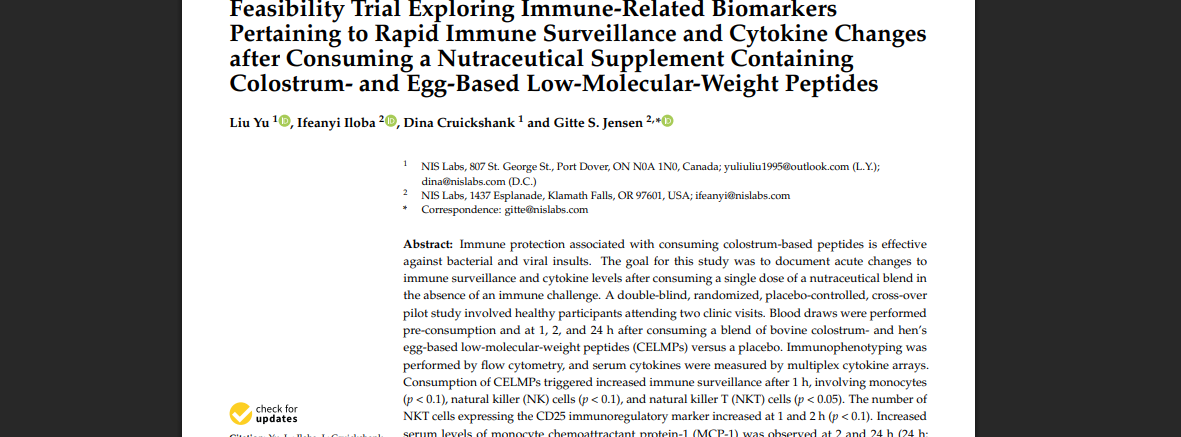
The central piece of evidence behind the claim that 4Life Transfer Factor “activates the immune system within two hours” comes from a clinical study sponsored by 4Life Research and conducted with an independent lab, Natural Immune System (NIS) Labs. According to the white paper and company press releases:
- Study design: 24 healthy adults participated in a placebo-controlled, randomized, double-blind, cross-over trial. Each received a single 600 mg dose of 4Life Transfer Factor® Tri-Factor® Formula on one occasion and a placebo on another, separated by a washout period. Blood samples were collected before ingestion and at 1, 2, and 24 hours afterwards.
- Measured outcomes: The researchers used sophisticated laboratory assays (cytokine profiling and flow cytometry) to track changes in immune biomarkers — including IFN-γ (interferon-gamma), IL-13, and activation markers on immune cells such as natural killer (NK) and natural killer T (NKT) cells.
- Results: The study reported significant alterations in cytokine levels and immune cell activation within two hours of supplement intake compared to placebo, suggesting a rapid immune response. Notably, the CD25 activation marker on NKT cells increased significantly within one hour.
- Conclusion: The study concluded that a single 600 mg dose was associated with measurable changes in immune activity within two hours, providing support for the claim of rapid immune activation.
This work was published in a peer-reviewed journal (Current Issues in Molecular Biology) and reported in corporate press releases. The randomized, placebo-controlled, cross-over design is a strong experimental approach for human studies — though the sample size and scope are relatively limited.
Important Note: Like many dietary supplement studies, these results are about biomarker changes — signaling molecules and immune cell activity — not clinical outcomes, and the company includes a standard disclaimer that these statements have not been evaluated by the FDA and are not intended to diagnose, treat, cure, or prevent disease.
Active Ingredients in 4Life Transfer Factor Products
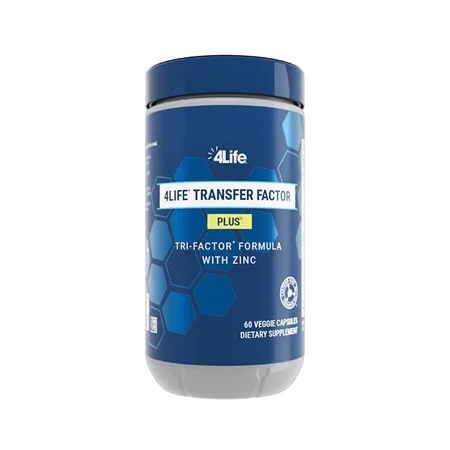
4Life’s core ingredient is the Transfer Factor Tri-Factor Formula, a blend of three patent-protected fractions derived from colostrum and egg yolk:
1. UltraFactor®
A proprietary concentrate of peptides and proteins extracted from bovine colostrum. This fraction is rich in immune-related peptides thought to support immune cell education, recognition, and communication.
2. OvoFactor®
A patented extract from chicken egg yolk, also containing immune peptides and signaling molecules distinct from those in colostrum, broadening the variety of immune cues provided.
3. NanoFactor®
A nano-filtered fraction of cow colostrum designed to deliver smaller bioactive peptides. The idea is that smaller molecules may be more readily absorbed or biologically active in immune signaling.
Together, these three fractions form the 4Life Transfer Tri-Factor® Formula — essentially a mix of peptide fragments that mimic or supplement natural immune signaling.
Other products, like 4Life Transfer Factor Plus and Transfer Factor Immune Boost, incorporate additional ingredients such as:
- Zinc — an essential mineral that plays a vital role in immune cell development and signaling.
- Vitamin C — a well-studied antioxidant known to support several aspects of immune function.
- Vitamin D — an immune-modulatory nutrient with roles in both innate and adaptive immunity.
- Proprietary mushroom extracts (e.g., shiitake, maitake) and other phytonutrients that traditional herbal medicine and some research suggest may influence immune activity.
These combinations aim to provide not just signaling molecules but nutritional cofactors that support robust immune function.
What the Broader Science Says About Transfer Factors
Outside of 4Life-specific research, scientific literature on “transfer factors” as a category suggests these molecules can influence immune signaling and cell-mediated responses in experimental settings. Historically, transfer factors have been used in research on antigen-specific immunity and in small clinical studies for various conditions.
However, it’s important to recognize:
- Much of the broader scientific evidence comes from early research or small trials, and large, widely replicated clinical trials are limited.
- While transfer factors have been shown to modulate cytokines and immune cells in vitro and in some small human studies, their precise mechanisms, absorption, and clinical relevance require further research.
Thus, while 4Life’s research provides interesting clinical biomarker data, the broader scientific community still views transfer factors as an emerging field rather than an established therapeutic approach.
Final Thoughts
4Life Transfer Factor’s claim that its Tri-Factor Formula can activate immune system markers within two hours is supported by a well-designed clinical study showing early changes in immune biomarkers. The product’s unique blend of immune peptides — combined with additional nutrients like zinc and vitamin C in various formulations — reflects a strategy to enhance immune communication and readiness.
However, it’s important to interpret these findings with context:
- The rapid immune “activation” described refers to changes in biomarkers, not clinical outcomes such as reduced illness or infection.
- Transfer factors as a broader concept still lack large-scale clinical validation across diverse populations outside of company-sponsored research.
- Always discuss supplements with a healthcare provider, especially if you are managing health conditions or taking medications.
In summary, 4Life Transfer Factor presents compelling early clinical evidence for rapid immune signaling effects, rooted in decades of transfer factor research. Whether this translates into meaningful health benefits is an area ripe for further academic study — and one that will benefit from independent, large-scale clinical trials.
*⁎Disclaimer: These products are dietary supplements and not intended to diagnose, prevent, treat, or cure any disease.
 by admin